To the House on the Corner; An Epitaph
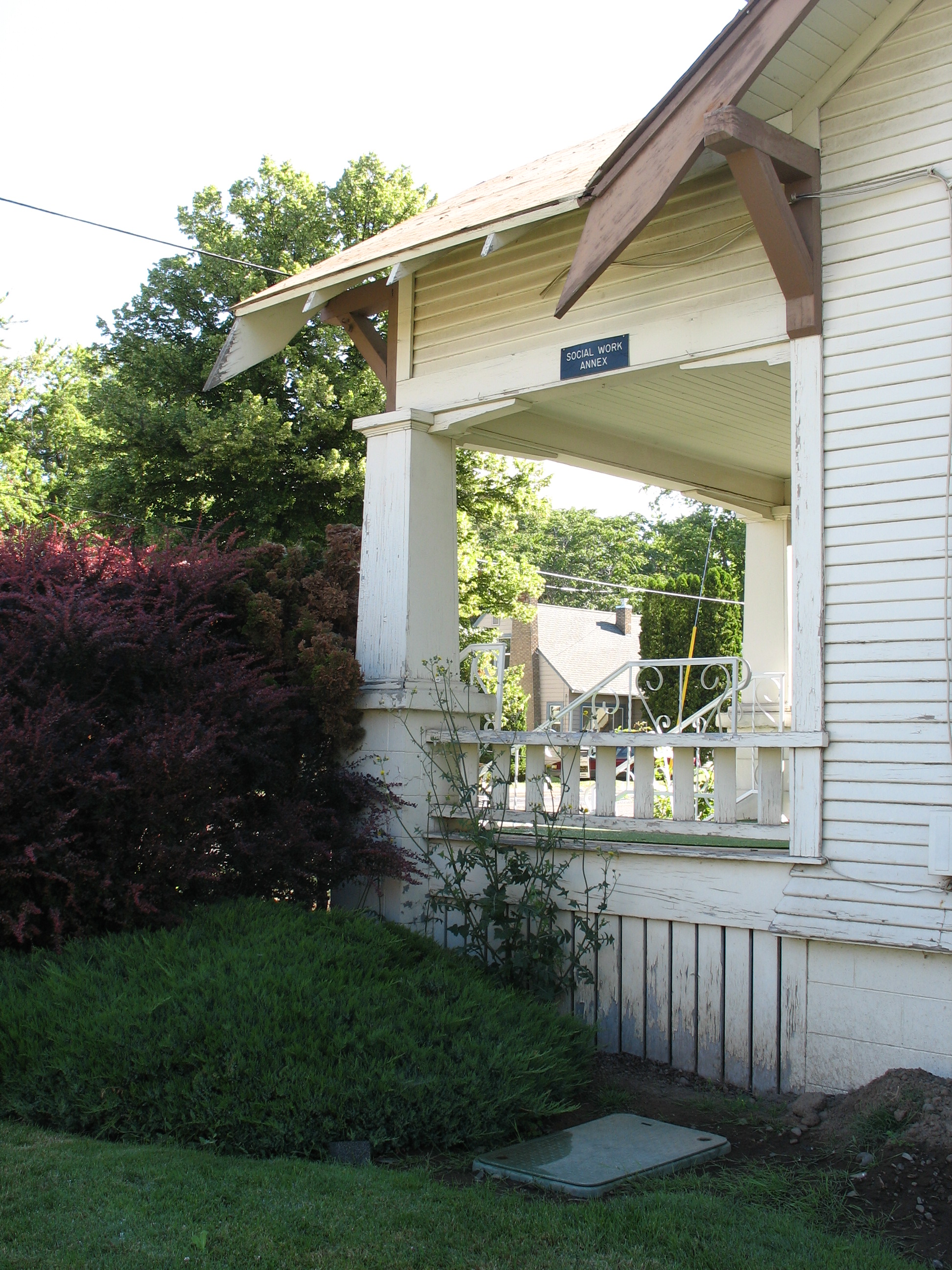
To the house on the corner, I’m sorry.
You’re on life support right now. Do you know that? I rather suspect that you do.
They’re going to pull the plug very soon, and again, I’m sorry.
I’ve no idea how old you are. Have you reached your hundredth birthday?
It’s hard to place you — you were likely built between 1910 & 1925 but you could have been built as late as 1935 or possibly even 1940. You’ve aged as well as can possibly be expected and you aren’t so far gone that I can’t look at you and see what some sanding, a coat of paint, some refinishing, and a bit of refining could do for your exterior.

* * *
About six years ago I began a crazy, unexpected journey. (I suppose the best journeys often are unexpected.) In that journey I found not only the house that made me feel at home, but I found a movement that I grokked, and I began to find the beauty in those tiny, unexpected, every day pieces of architecture. Like you.
There are so many types of bungalows that I can’t place you exactly. They’re as eclectic as the people who built them and lived in them and loved them and perhaps that’s why I’ve fallen so in love with you. You might be a California Bungalow, but you’re not in California so I’m not certain how that works. All I know is that I drove past you every day, and when I began to fall in love with Bungalows I fell in love with you.
You weren’t a house then, but rather you housed a department on a college campus. I’ve never been inside you so I don’t know what your original features were, and I’ve no idea if they still existed or if they were gutted long ago to make room for desks, and offices, and learning students & teaching faculty. But I can look at your outside and I can know that at one time they were no doubt beautiful too. Your windows are original, perfectly sized, and perfectly placed. Your front door is gorgeous, and as I peek in windows I can see other doors equally gorgeous, and while the braces under your eaves aren’t remotely unique among bungalows they’re still beautiful: You’re beautiful.
Even now.
Even on life support.
There are those conversations that replay in your mind; I know you know what I mean even if you can’t share them with us. I remember a conversation driving by you and your sister buildings — ‘those houses are so beautiful & have such potential to be gorgeous’, I said. ‘I wish they’d paint them properly’. There was a beat and then I added, ‘and I hope if they ever don’t use them for departments they turn them back into homes’. The person I was with — I can’t remember who — seemed skeptical that would ever happen.
As it turns out they were right, and today that conversation plays as pointlessly naive, like a child who doesn’t quite understand the way the world works. Or perhaps an adult who doesn’t want to understand the way the world works.
Either way, I’m sorry.
* * *
What do other people see when they look at you? Do they see a tottering cottage? Drafty windows? An old, decrepit house, an expense and an inconvenience that just needs to be torn down and replaced with something ‘green’, ‘modern’ or ‘more convenient’? I don’t know what they see because I can’t see as they do. I can only see as I do, and I’ll tell you what I see.
I see trees. Tall trees, old trees, the sorts of trees that are few and far between these days. I see the loggers cutting them down, the mills sawing them, and I see them moving into you. These old growth forests that we no longer look at in the same way today no doubt formed your backbone – I know because I’ve seen them in other homes of your age and relative simplicity. I’ve seen Douglas Fir as beams in unfinished basements. I’m sure you’ve got some too. That wood today is rare and would cost a fortune, and if it could be afforded at all would only ever be used on the externals — the floors, the cabinets, and other woodwork that people will see — back when you were born it was your floor boards, the studs in your wall, those old growth forests were your skeleton as well as your skin, and I see them.
I see the architect that designed you. Was it someone local? It might have been. Or it might have been someone far away, but either way you were born out of a movement in this country that sought to create beautiful, well-decorated middle class homes. A small piece of heaven on earth some might say. That was your original purpose and it was a worthy one.
I see the builders and craftsmen that built you. You were built with wood and sweat and the talent of local builders and craftsmen and artisans. Their names may have long ago been forgotten, but every single one of them left something of themselves in you. In the frames around the windows & doors, in the windows themselves, in the detail that is easy to see if you have the eyes and take the time to look. And had I ever been inside I’m certain I would have seen some of it there as well, even if it had been torn apart in your later years I’ve no doubt it still existed in the doors: the floors: the details.
I see your history. I see in my minds eye how you must have looked brand new, and I’ve seen and worked with many of the students and faculty who more recently sat within your rooms. You remind me of what this town once was, and you have for decades now carried that past into the present. But more than that, you are a reminder of the history of an entire movement, and the history of thousands of houses like you all over the United States. You are a reminder of my grandfather & my great-grandfather and a reminder that the simple homes of the simple person can be art as much as the homes of royalty and millionaires. It’s in how we see them, what we put into them, how we care for them, and it’s in what we view as important.
I see your potential. I’ve always seen that. Your location is ‘inconvenient’ apparently, but people move houses and I sincerely wish you could have been moved, put on an empty lot in an older neighbourhood, painted up, restored, & loved. You need paint, and a porch swing, and flowers planted around your foundation. Loved and appreciated, you would have lived to a ripe old age — perhaps you would have even out-lived me. You would have stood as a reminder of what our country was and had and the natural resources, talents, and blessings that have been gifted to our nation. A hundred years from now someone might have looked at you and seen that beauty and history and wondered about the person that sanded your wood, painted your siding, cut the glass for your windows.
You’ll never live out that potential and I’m sorry.
* * *
This is my good-bye to you. It’s also an apology that I didn’t say more and that I didn’t say it sooner. It’s an apology for a culture obsessed with shiny and new and modern and convenient. There may be hundreds of thousands of houses similar to you in this country, but you are unique and as such you are a loss to our history, our hearts, & our souls whether we recognize it or not.
It’s an apology, but it’s also a promise:
- I will never stop trying to teach others to look at that house they go past every day and see its beauty & its history.
- I will be the best steward of my Bungalow that I can be. I might not be able to change the way the entire world works, but I can change my corner.
- I will not forget you, or the materials that made you, or the men (& women) who built you & loved you & knew you.
I want you to know before you go, that you will always live in my minds eye as you ought to always have been: simple, beautiful, and wanted.
If I were asked to say what is at once the most important production of Art and the thing most to be longed for; I should answer; A beautiful House; and if I were further asked to name the production next in importance and the thing next to be longed for; I should answer; A beautiful Book. To enjoy good houses and good books in self-respect and decent comfort, seems to me to be the pleasurable end towards which all societies of human beings ought now to struggle.” – William Morris
1 thought on “To the House on the Corner; An Epitaph”
You must be logged in to post a comment.